Political ignorance haunts 2016 campaign
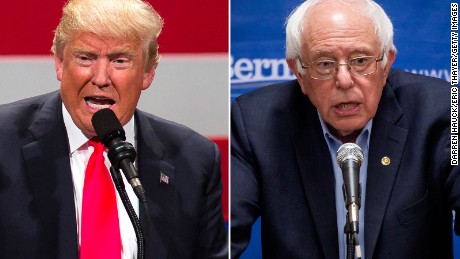
(CNN)A specter is haunting this year’s presidential election: political ignorance. Both Democrats and Republicans love to accuse the other party’s supporters of that sin. Sadly, both are often right.
The presumptive GOP nominee Donald Trump has raised exploitation of ignorance to new heights. Many of the main themes of his campaign prey on it. Trump’s campaign first took off when he claimed we are being inundated with Mexican immigrants, who increase the crime rate because many are “criminals” and “rapists.” In reality, net migration from Mexico has been close to zero for the last 10 years. Yet few Americans seem to know that. And while studies consistently find that immigrants have lower crime rates than native-born Americans, a 2015 Pew Research Center study found that 50% of Americans (and 71% of Republicans) believe immigration is making crime “worse.”


What is behind this public ignorance?
It is not that the voters are dumb, but that they have little incentive to learn. Because there is only an infinitesimally small chance that any one vote can influence the result of an election, even most smart people usually have little motivation to follow politics closely. That helps explain why political knowledge levels have remained low for decades, in spite of rising IQ scores and educational attainment, and despite the increasing availability of information on the Internet.
There is no easy solution to the problem of political ignorance. But we can at least mitigate it by limiting and decentralizing government. If you are like most people, you probably spend more time considering information when you decide what smartphone to buy than when you decide who to support for president. Similarly, people are far more discerning when they “vote with their feet” to decide what state or local government to live under than when they vote at the ballot box. That is because they realize that individual foot voting decisions are actually likely to make a difference, whereas individual ballots are not.
Devolving more issues to the private sector or to the state and local level can enable us to make more of our decisions in a setting where we have strong incentives to be well-informed. Although it is easy to think otherwise in the year of Trump, most of the public is not stupid. They just need better incentives to make smart choices.
Read more: http://www.cnn.com/2016/05/12/opinions/political-ignorance-somin/index.html


